Healthy hair isn’t defined by shine alone. True hair health comes from strength, elasticity, hydration, and a balanced scalp. If you’re unsure whether your hair is in good condition, this checklist will help you assess it quickly and accurately.
Use these simple tests and visual cues to understand what your hair needs and how to keep it thriving.
- Your Hair Has a Natural, Consistent Shine
Healthy hair reflects light evenly and looks smooth from root to tip.
Signs of healthy hair:
- natural sheen
- smooth surface
- even light reflection
Signs of damage:
- dullness
- rough texture
- uneven appearance
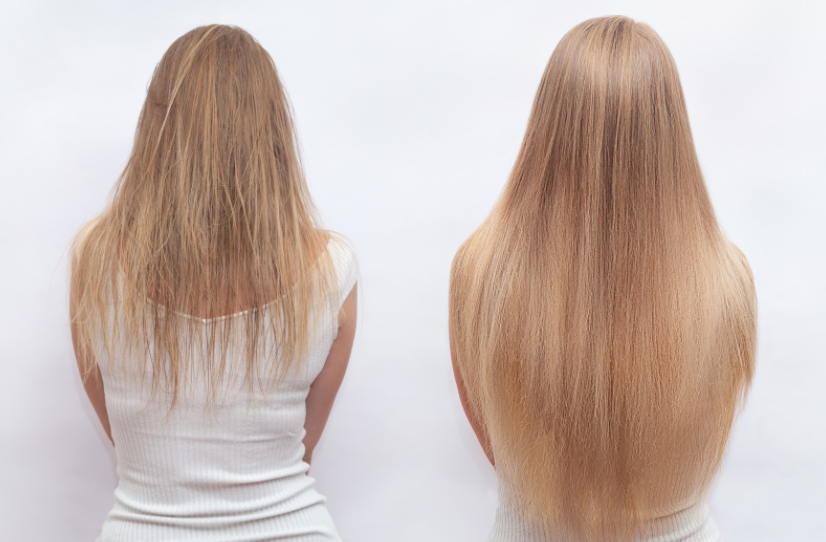
Visual example: a glossy, smooth strand compared with a dry, frayed one.
- Your Hair Feels Smooth From Root to Tip
Run your fingers down a strand.
Healthy hair feels:
- soft
- smooth
- consistent in texture
Unhealthy hair feels:
- rough
- brittle
- bumpy (a sign of cuticle damage)
Visual example: a smooth cuticle layer versus a lifted, damaged cuticle.
- Your Hair Has Good Elasticity
Elasticity shows how well your hair stretches without breaking.
Test: gently stretch a single strand.
Healthy hair:
- stretches and returns to its original length
- feels flexible
Unhealthy hair:
- snaps immediately
- feels stiff or overly stretchy
Visual example: a strand that stretches and bounces back versus one that snaps mid‑stretch.
- Minimal Breakage and Split Ends
Healthy hair maintains its structure.
Signs of healthy hair:
- few visible split ends
- minimal breakage when brushing
- clean, intact ends
Signs of damage:
- frayed or feathered tips
- white dots at the ends
- lots of short, broken pieces
Visual example: a clean, blunt end versus a frayed, split end.
- Your Hair Retains Moisture Well
Healthy hair holds hydration.
Healthy hair:
- feels soft for days after washing
- doesn’t tangle excessively
- absorbs products evenly
Unhealthy hair:
- feels dry within hours
- tangles easily
- soaks up products but still feels dry
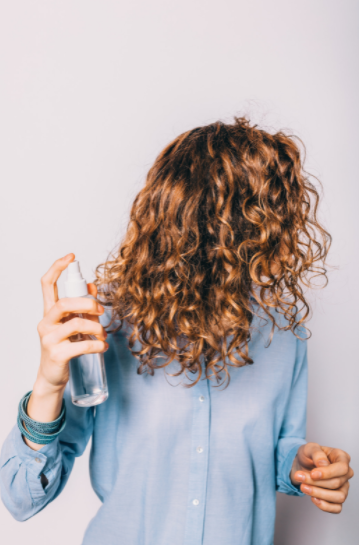
Visual example: a hydrated curl clumping together versus a dry curl separating and frizzing.
- Your Scalp Feels Comfortable and Balanced
Healthy hair starts with a healthy scalp.
Healthy scalp:
- no itching
- no flaking
- no redness
- no tightness or burning
Unhealthy scalp:
- persistent itch
- flakes or oil imbalance
- soreness or sensitivity
- visible redness or bumps
Visual example: a calm, even‑toned scalp versus an inflamed or flaky one.
- You Shed a Normal Amount of Hair
Shedding is normal — losing 50–100 hairs per day is typical.
Healthy hair:
- sheds consistently
- regrows at a normal rate
- maintains density
Unhealthy hair:
- sudden increase in shedding
- visible thinning
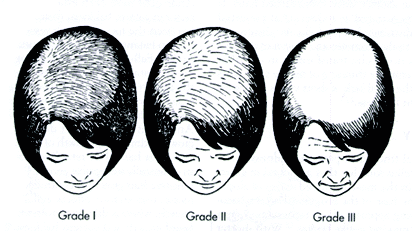
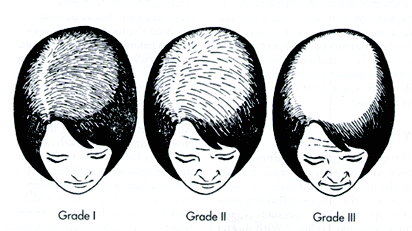
- widening parting
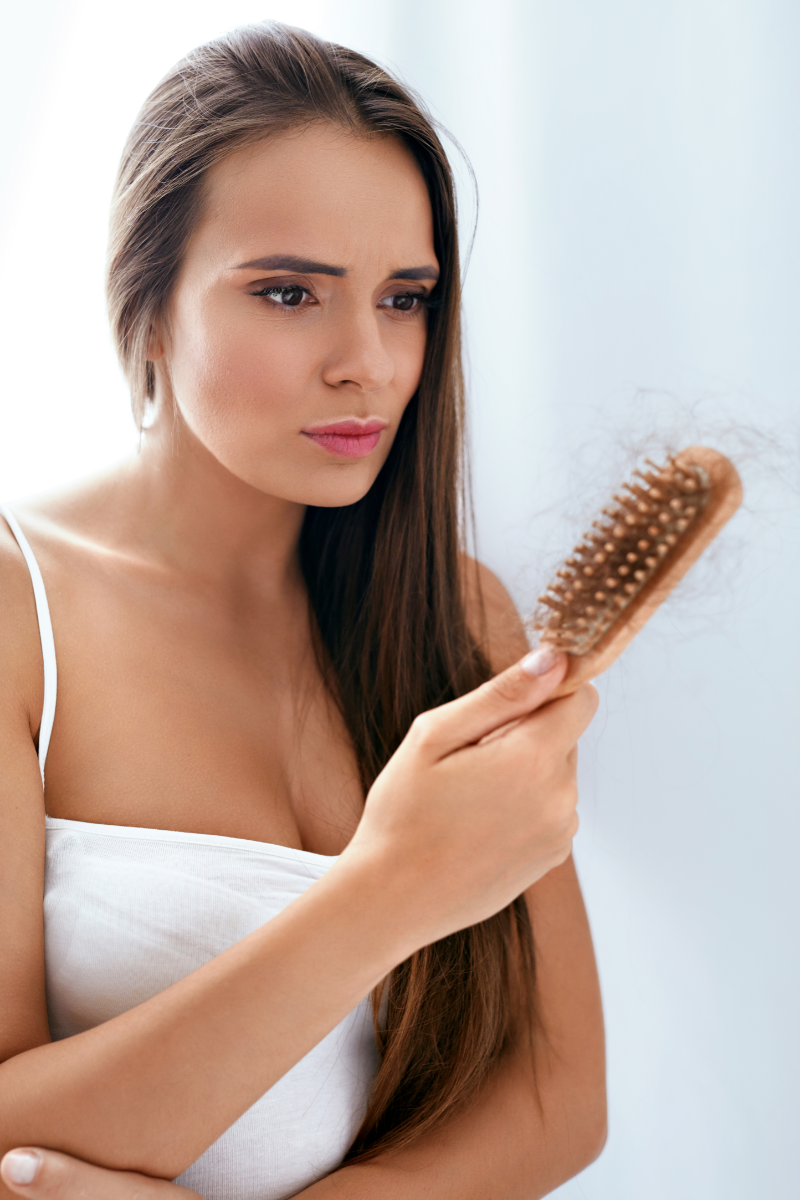
Visual example: a normal amount of shed hair in a brush versus excessive shedding.
- Your Hair Responds Well to Styling
Healthy hair behaves predictably.
Healthy hair:
- holds styles
- smooths easily
- resists frizz with minimal product
Unhealthy hair:
- won’t hold shape
- frizzes quickly
- feels unmanageable
Visual example: a smooth blow‑dry versus a frizzy, uneven finish.
Quick Healthy Hair Checklist
Healthy hair typically shows:
- natural shine
- smooth texture
- good elasticity
- minimal breakage
- balanced moisture
- comfortable scalp
- normal shedding
- predictable styling behaviour
If several of these areas are lacking, your hair may need targeted care or professional assessment.
Final Thoughts
Healthy hair is the result of strong strands, balanced moisture, and a calm, well‑functioning scalp. If you notice dryness, breakage, scalp irritation, or increased shedding, it may be time to adjust your routine or seek professional guidance.
A trichologist can help identify the cause and guide you toward healthier, stronger hair.